ENGINEERING NOTEBOOK / 029
Concept Design
Designing a Future Urban Cruiser
A compact carbon-fibre urban bike built around enclosed energy storage, unconventional steering, two-wheel drive and a deliberately unfinished mechanical architecture.
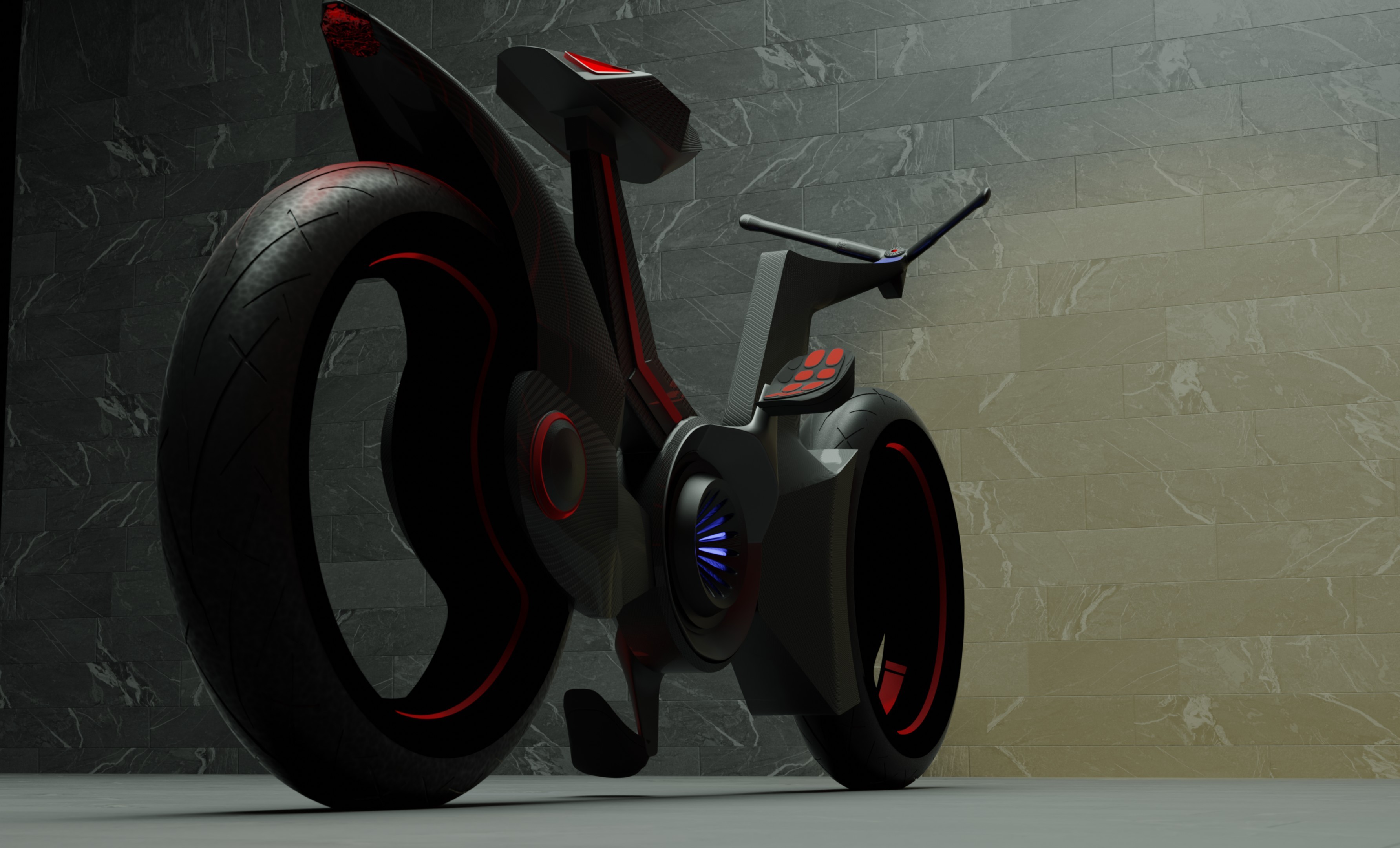
Designing a Future Urban Cruiser
Sometimes a design starts with a very practical question.
This one started with a much less practical one:
What could a bicycle look like if I stopped designing it like a bicycle?
I wanted to explore an urban cruiser with a completely different architecture.
Compact.
Enclosed.
Electric.
And unlike anything I was seeing around me.
The concept eventually became a carbon-fibre vehicle with hollow structural bodywork, concealed energy storage, two-wheel drive, unconventional steering and the possibility of self-balancing.
I never finished the project.
But the design became one of the more interesting experiments sitting in my drive.
360° OF THE CONCEPT
Before breaking the machine down into its individual systems, this is the complete vehicle as I originally imagined it.
360° render of the complete urban cruiser concept.
01 — STARTING WITH THE ARCHITECTURE
I did not want to build another bicycle and simply replace the conventional drivetrain with an electric motor.
I wanted to rethink the architecture from the beginning.
The frame would become more than a frame.
It would become the main body of the vehicle.
The carbon-fibre structure was designed as a hollow volume, creating internal space that could be used for batteries and other systems.
Instead of hanging components from the outside, the idea was to put as much of the machine as possible inside the structure.
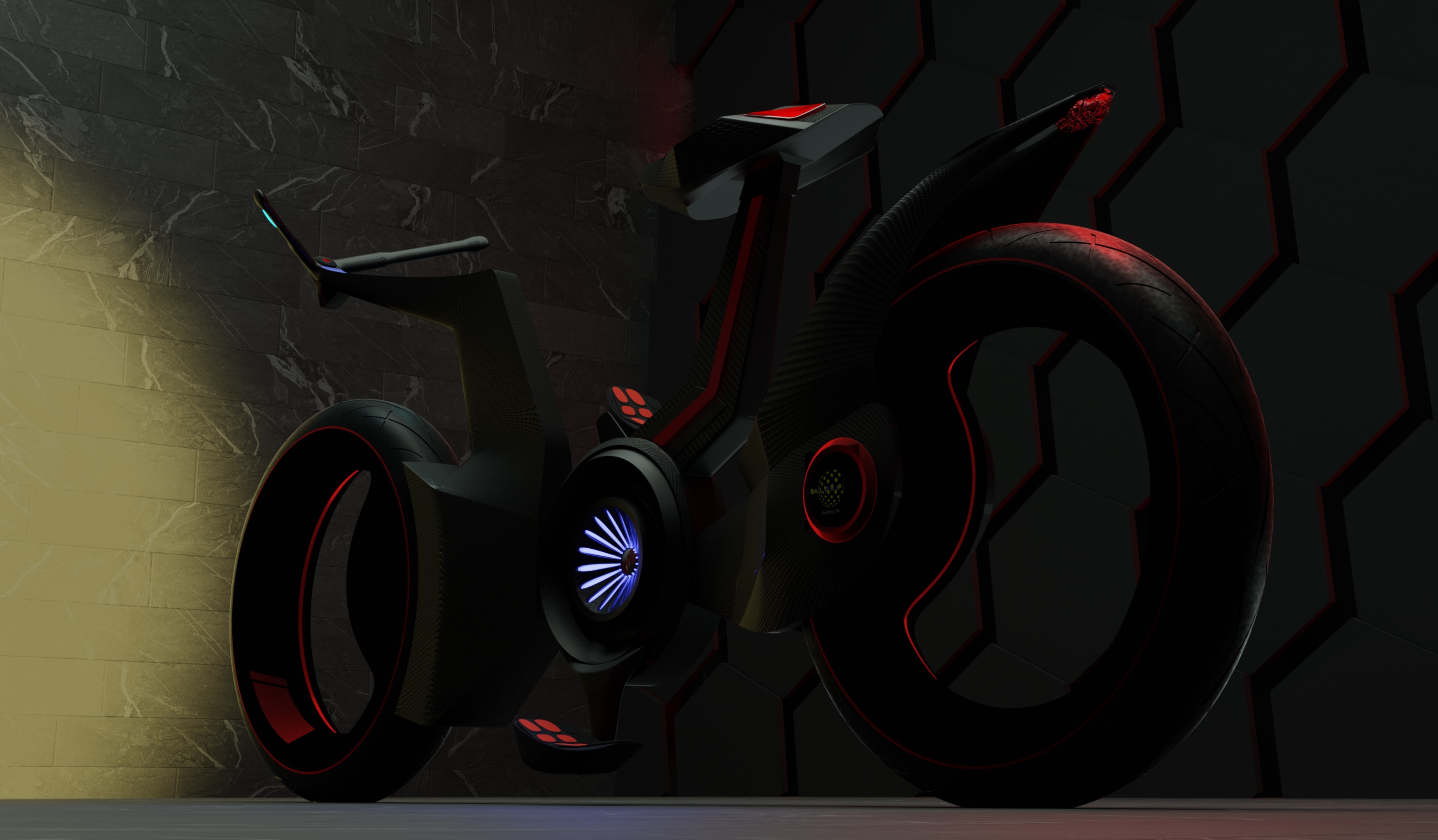
The hollow carbon-fibre body was designed around the systems inside it.
That approach immediately changed the proportions of the vehicle.
The structure could become tighter.
The electronics could disappear into the body.
And the bike could start looking less like a conventional bicycle and more like a compact personal mobility machine.
02 — THE QUESTION OF POWER
At one point, I asked myself a ridiculous question:
Could future bikes be nuclear powered?
The central blue elements in the concept came from that thought.
They were never intended to represent a fully engineered nuclear propulsion system.
They were a visual and conceptual exploration of what a radically different power architecture could look like.
The practical solution would still be electric.
A compact motor system could occupy that central region while the batteries were stored inside the hollow frame.
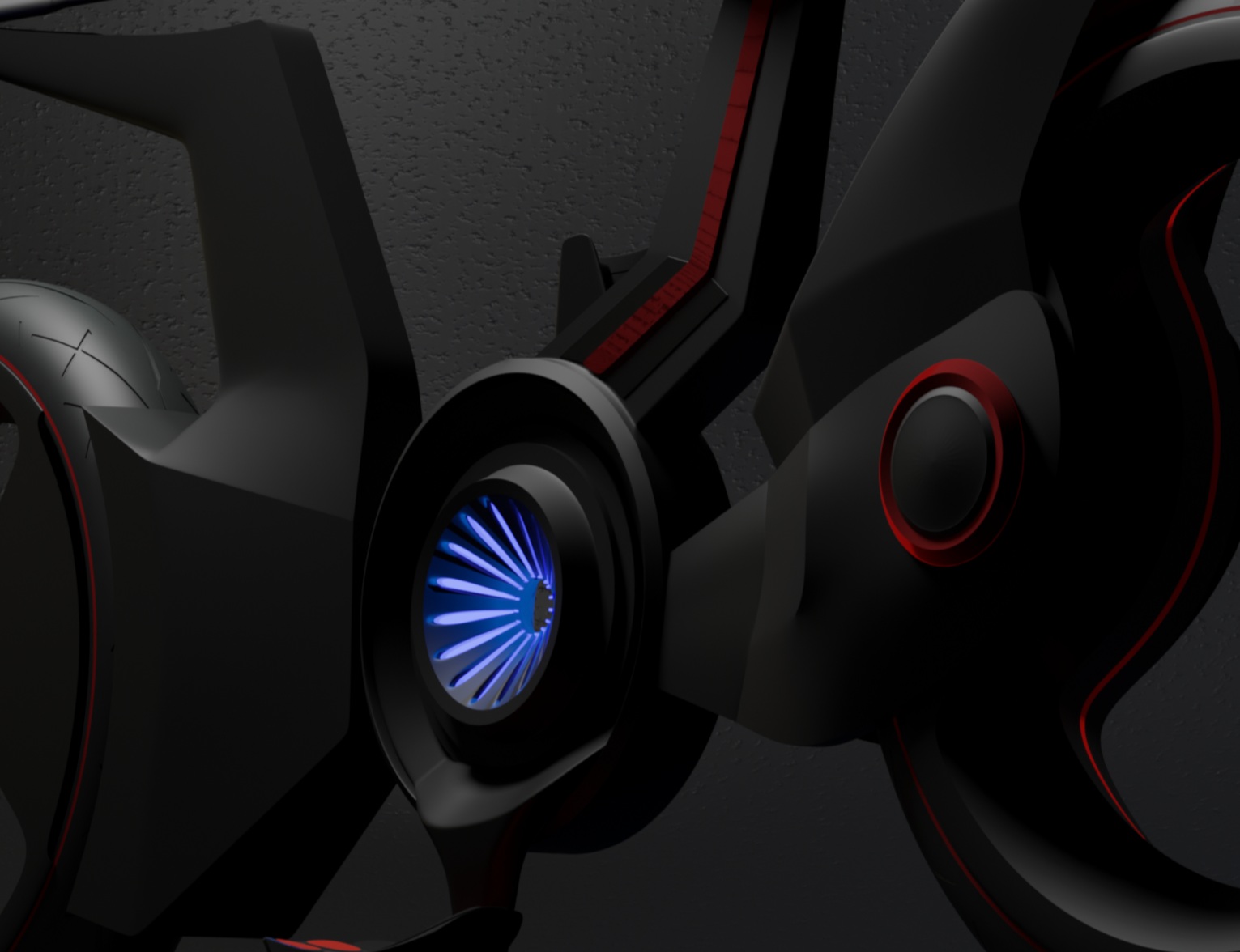
The central elements explored a hypothetical future power architecture.
The interesting part was not the nuclear idea itself.
It was the question behind it:
What happens to the vehicle architecture when the energy system becomes smaller, more integrated and less visually dominant?
That question drove much of the design.
03 — PUTTING THE BATTERY INSIDE THE FRAME
The hollow carbon-fibre body created another opportunity.
The battery could be packaged inside the structure rather than mounted visibly on top of it.
That would help preserve the compact silhouette while protecting the energy system inside the main body.
The transmission concept followed the same philosophy.
Rather than exposing a conventional drivetrain, I wanted the transmission to run through the hollow structure toward the rear wheel.
The goal was to treat the drivetrain as part of the architecture rather than an external collection of components.

Exploring internal battery packaging.
04 — TWO-WHEEL DRIVE
The bike was intended to use two-wheel drive.
The motors would be concealed inside the enlarged wheel sections.
This allowed the wheels themselves to become part of the propulsion system while keeping the centre of the vehicle visually clean.
The idea was to distribute propulsion rather than relying on a single conventional driven wheel.
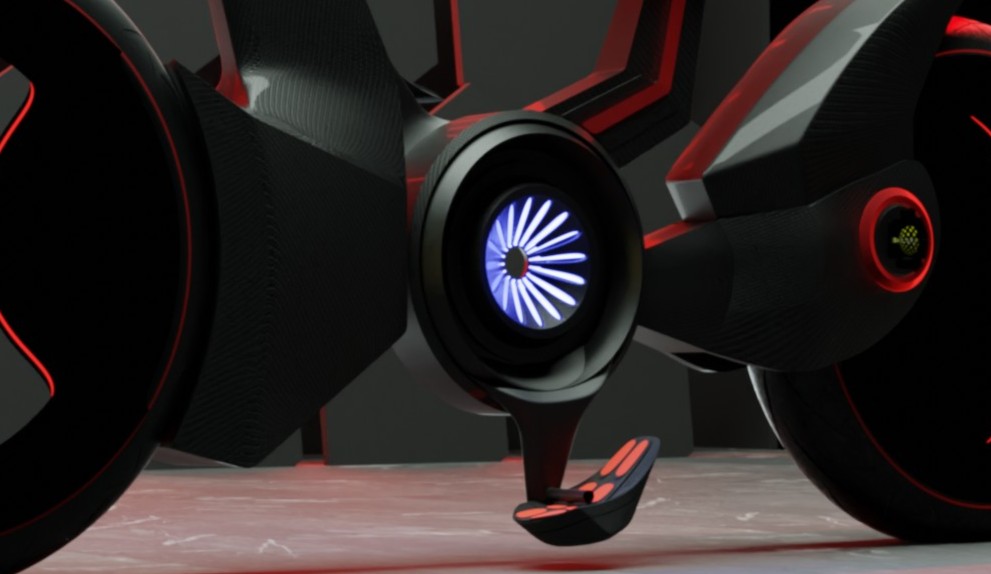
The wheel sections were designed around concealed motor systems.
This architecture also opened up possibilities for control.
Independent drive at the front and rear could potentially become part of the vehicle's stability and traction strategy.
At the concept stage, however, this remained an architectural idea rather than a validated control system.
05 — STEERING WITHOUT A CONVENTIONAL FORK
The steering was probably the strangest part of the project.
I did not want to use a conventional bicycle steering arrangement.
Instead, I imagined a system where the rider's input could be detected through differential pressure across the two handlebars.
The rider would push harder on one side than the other.
The system would detect that difference and translate it into a steering command.
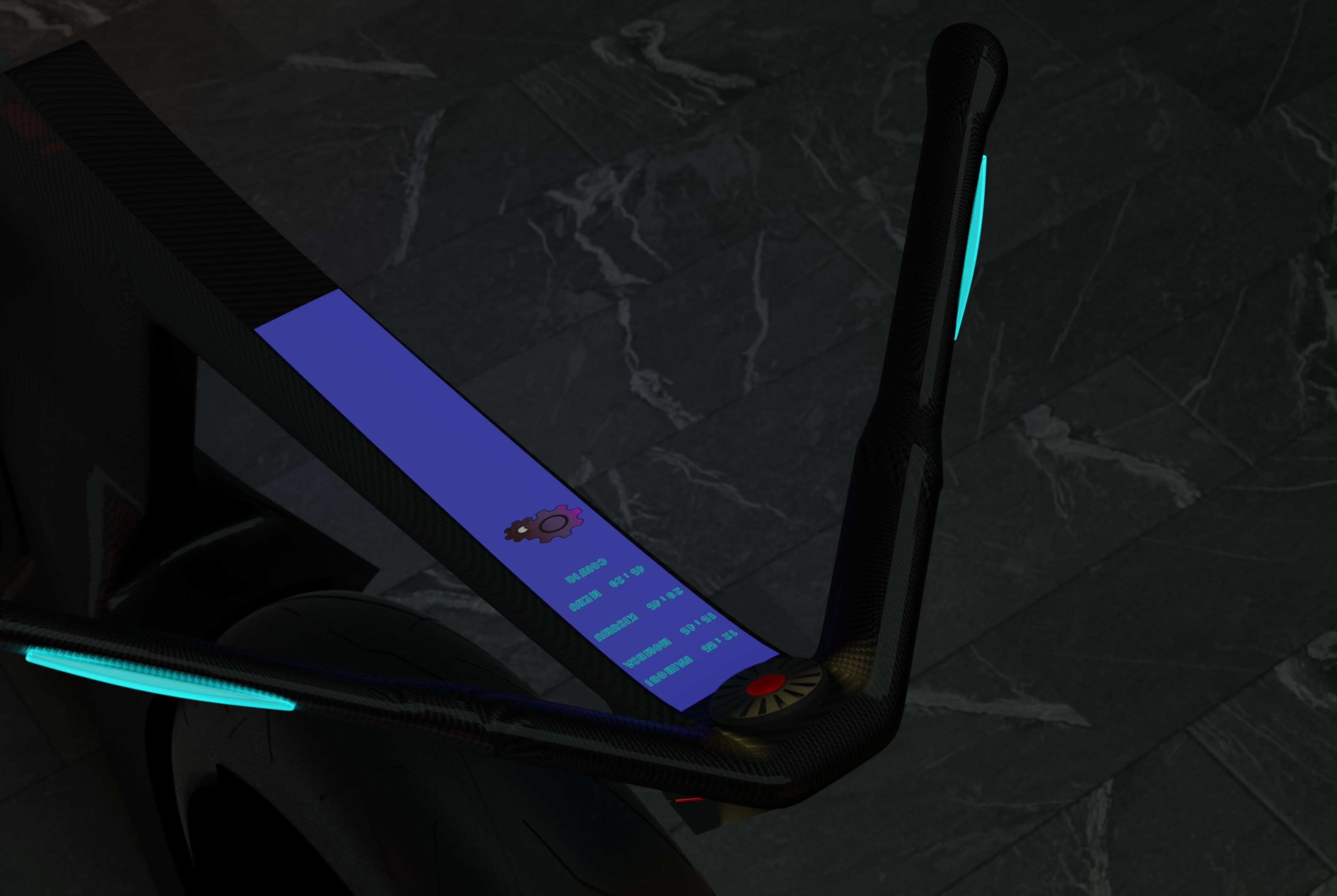
The unconventional cockpit and steering interface.
That means the handlebars would no longer have to be mechanically connected to the front wheel in the conventional way.
They would become an input interface.
The actual steering movement could then be produced by an electrically actuated mechanism.
That distinction was deliberate.
I was beginning to think of the bike as a by-wire vehicle, rather than a mechanically controlled bicycle.
06 — WHY THE BIKE LOOKS SO STRANGE
There is a reason I have never shown a finished steering mechanism for this concept.
I never finished that part of the CAD.
The central architecture was still being explored, and I deliberately left the suspension and internal mechanism somewhat unresolved.
That is partly why the final concept has this strange suspended appearance.
It was intentional.
I wanted to see what the vehicle could look like before completely committing to the mechanical solution underneath it.
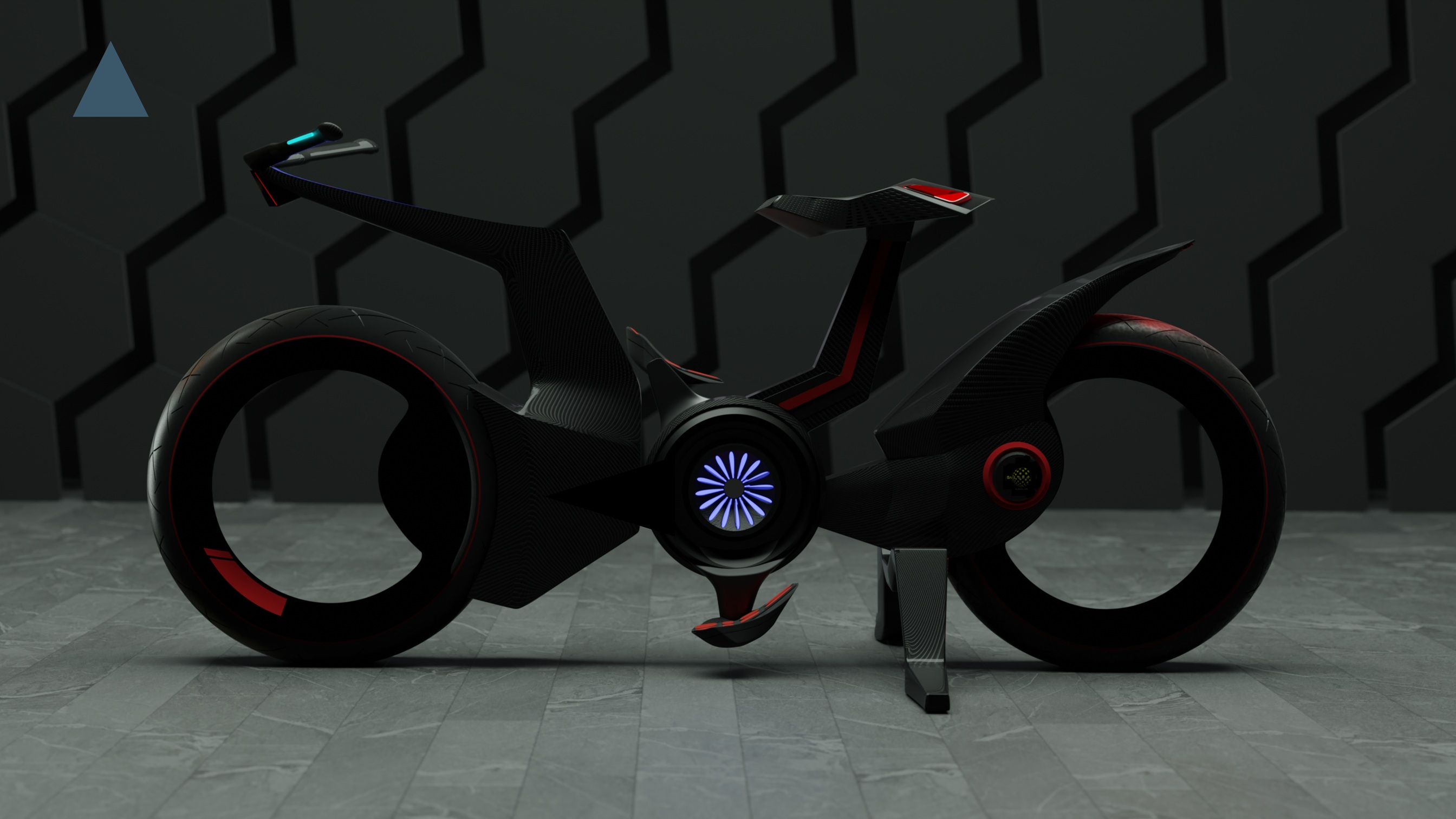
The unfinished central architecture that shaped the final form.
There was still a lot left to solve:
steering geometry, structural load paths, actuator sizing, suspension travel and the relationship between the frame and the wheels.
The concept had reached the point where the architecture was visible, but the complete mechanism was not finished.
07 — ADAPTIVE SUSPENSION
The wheel sections were also designed around adaptive suspension.
The intention was to give the vehicle a smoother ride while keeping the compact architecture intact.
Again, this was not a finished production suspension system.
It was part of the larger question:
Could the entire vehicle react to the rider and the road electronically rather than relying solely on conventional passive bicycle components?
That question connected the steering, suspension and balance systems.
08 — A BIKE THAT COULD BALANCE ITSELF
The concept also explored self-balancing.
The idea was to use the central rotating system to generate gyroscopic effects that could contribute to maintaining the vehicle's balance.
That would potentially allow the bike to assist the rider during low-speed operation or stationary conditions.
This was another area where the concept went beyond what I had actually validated.
The architecture suggested the possibility.
The engineering proof still needed to be done.

The central rotating element was part of the self-balancing concept.
09 — THE DESIGN PROCESS
The project was primarily a design exercise.
I started with the overall vehicle architecture and progressively worked toward the individual systems.
The process moved between:
IDEA → SKETCH → FORM → CAD → SYSTEM CONCEPT → RENDER
The physical prototype never came.
But the digital model allowed me to explore something that would have been extremely difficult to test physically at the beginning:
the relationship between the rider, the wheels, the energy system, the drivetrain and the body structure.

Early design thinking.

CAD development.
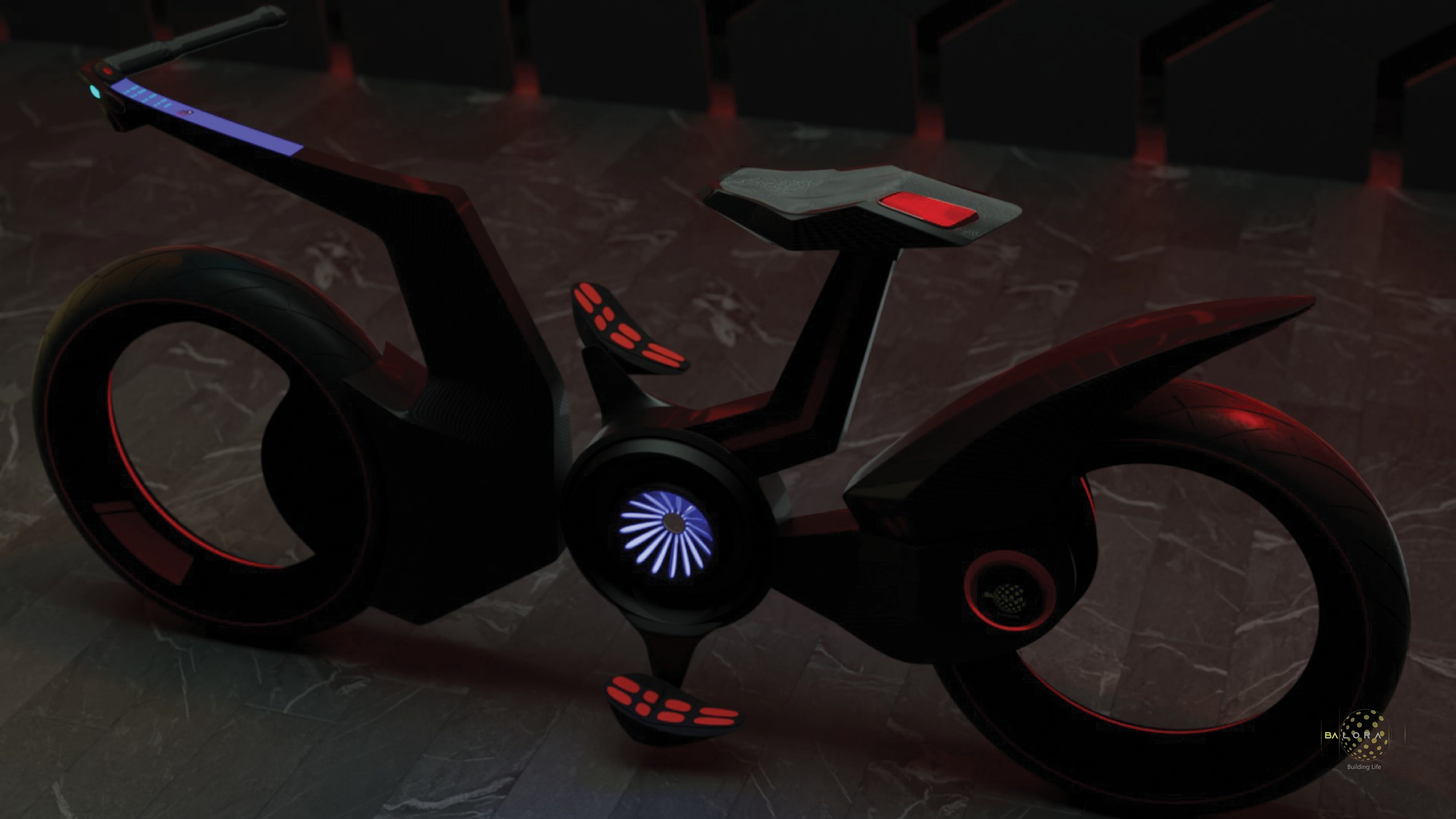
The Blender render setup used to develop the final visual presentation.
The renders became part of the design process themselves.
They forced me to look at proportions, interfaces and packaging as a complete vehicle rather than as isolated CAD components.
10 — WHAT I WOULD CHANGE NOW
Looking at the project now, I can immediately see how much would need to change before fabrication.
The steering would need a complete mechanical and control architecture.
The carbon-fibre structure would need proper structural analysis and laminate design.
The suspension would need kinematic and dynamic validation.
The battery enclosure would need thermal and safety engineering.
The two-wheel-drive system would need a control strategy.
And the self-balancing system would need actual experimental validation.
The renders make the vehicle look finished.
It wasn't.
And that distinction is important.
11 — WHY I STILL LIKE THE DESIGN
Even without a prototype, the project was useful.
It forced me to think about the bicycle as a system rather than a collection of familiar parts.
The frame became energy storage.
The wheels became propulsion systems.
The handlebars became sensors.
The central rotating system became part of the balance architecture.
And the carbon-fibre body became the structure and enclosure at the same time.
That is what I was really exploring.
Not simply a new bicycle.
A different way of arranging the machine.
Notebook 029
Sometimes the most useful prototype is the one that forces you to question the architecture before you build it.
END OF NOTEBOOK 029
BACK TO
THE NOTEBOOK
Every finished design leaves another question behind.
RETURN TO JOURNAL