ENGINEERING NOTEBOOK / 027
Product Development
Tri-Tran: From Sketches to a Product
How twelve iterations, a joining problem and a laser cutter turned an experimental lampshade into a repeatable product.
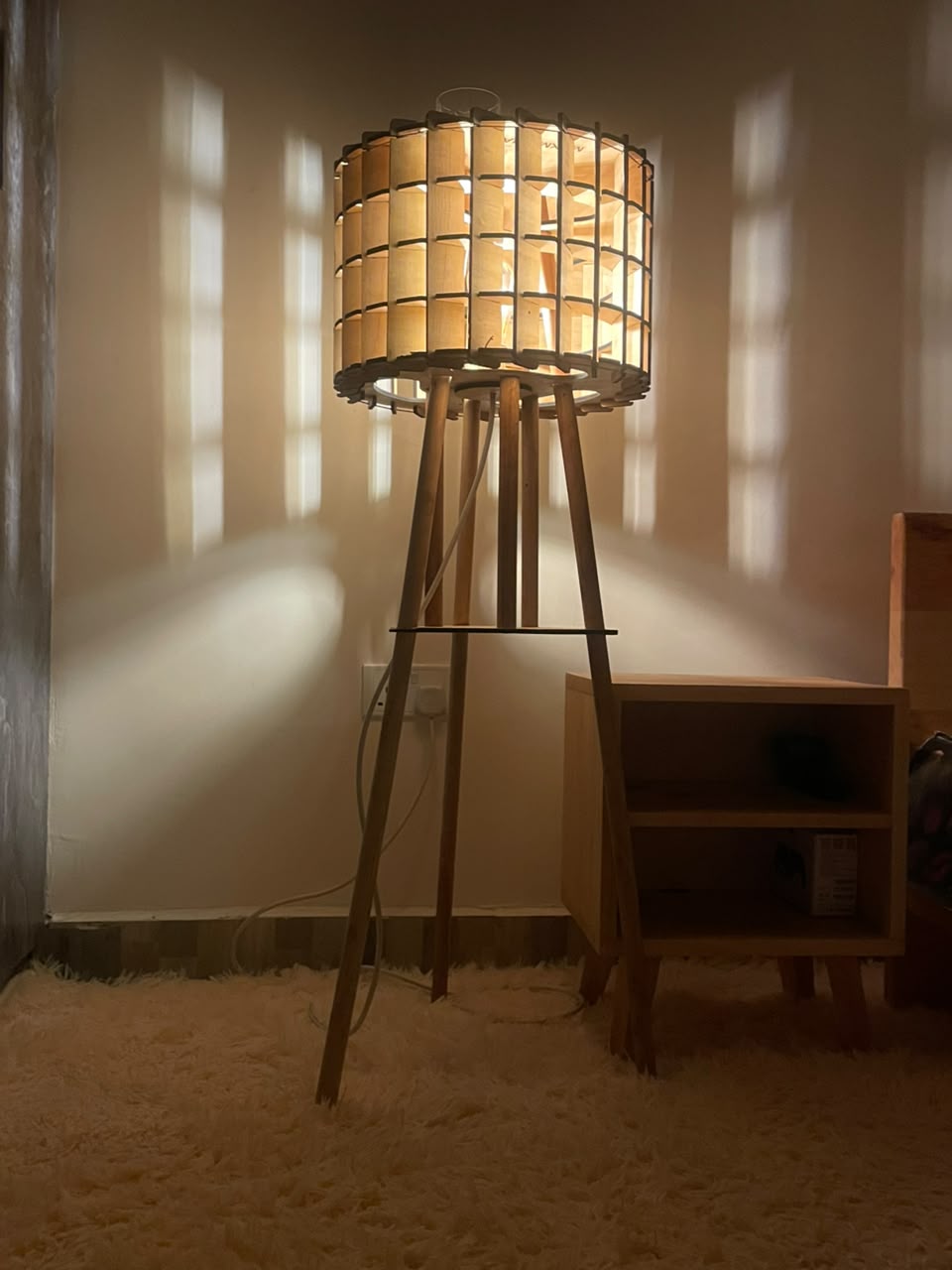
Tri-Tran: From Sketches to a Product
I started designing the Tri-Tran lampshade back in 2023.
At the beginning, it was nothing more than a collection of sketches, rough ideas and questions about form.
I spent a lot of time drawing, changing proportions, trying different geometries and thinking about how the individual members could come together to form a complete lampshade.
The final design was not obvious.
It took twelve iterations before I arrived at a form I was finally happy with.
01 — THE FIRST ITERATIONS
The early versions were mainly about discovering the form.
I was experimenting with the arrangement of the vertical members, their spacing, their proportions and the overall silhouette of the lampshade.
Each iteration answered one question and usually created another.
Some versions looked good but were difficult to assemble.
Others assembled easily but did not have the visual character I was looking for.
The process was largely:
SKETCH → BUILD → LOOK → CHANGE → REPEAT
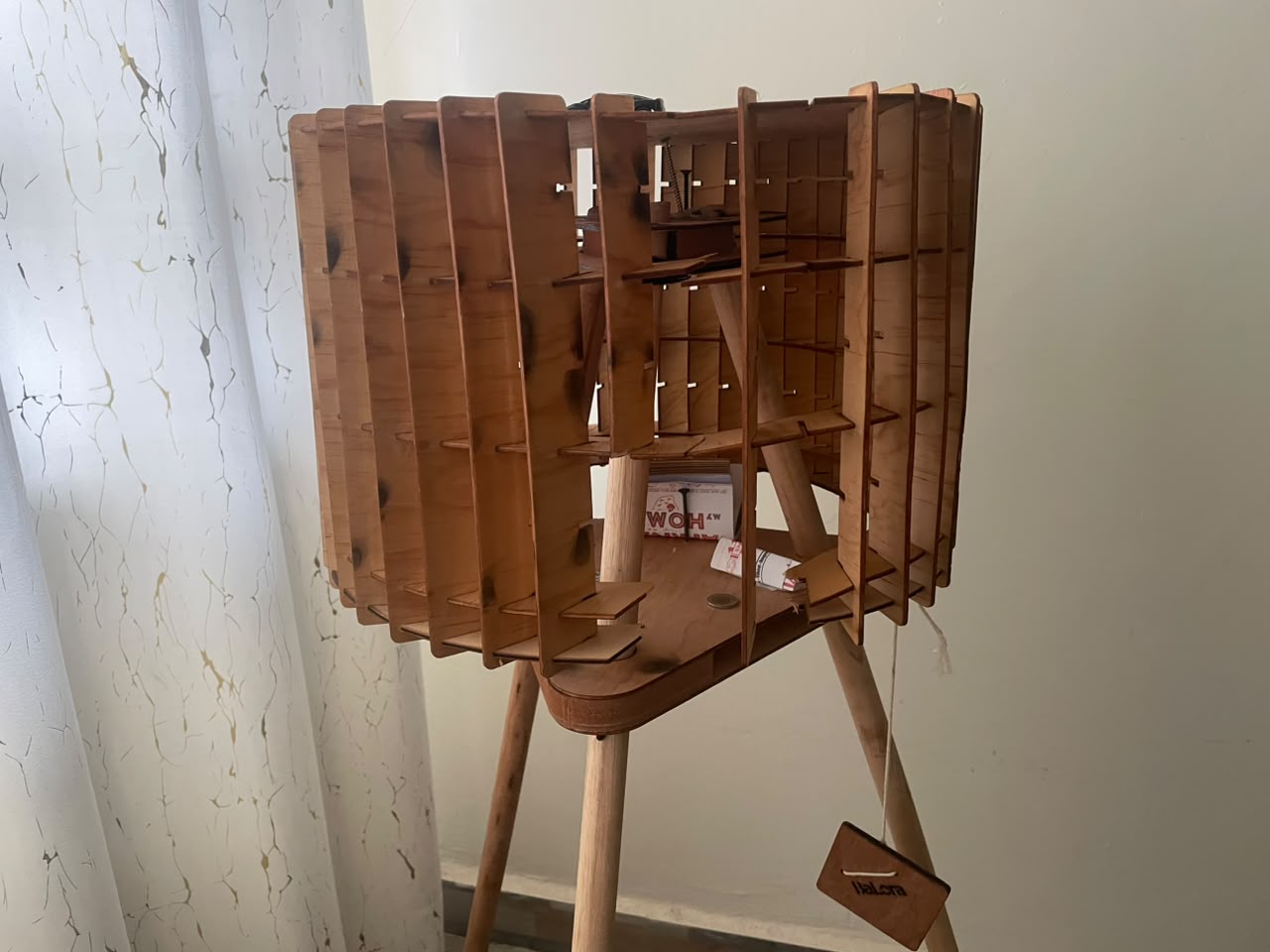
A progression of the lampshade iterations.
02 — THE JOINING PROBLEM
One of the biggest problems was not the overall shape.
It was how the vertical members stayed together.
Initially, I relied on an interference-based design.
The members were designed to mesh with one another and remain in position through friction.
It worked.
But it was not a particularly sustainable way of making the product.
The more I thought about producing the lampshade repeatedly, the more obvious the problem became.
I didn't want the design to depend entirely on how tightly individual pieces happened to interfere with one another.
I needed a simpler and more repeatable way to hold the structure together.
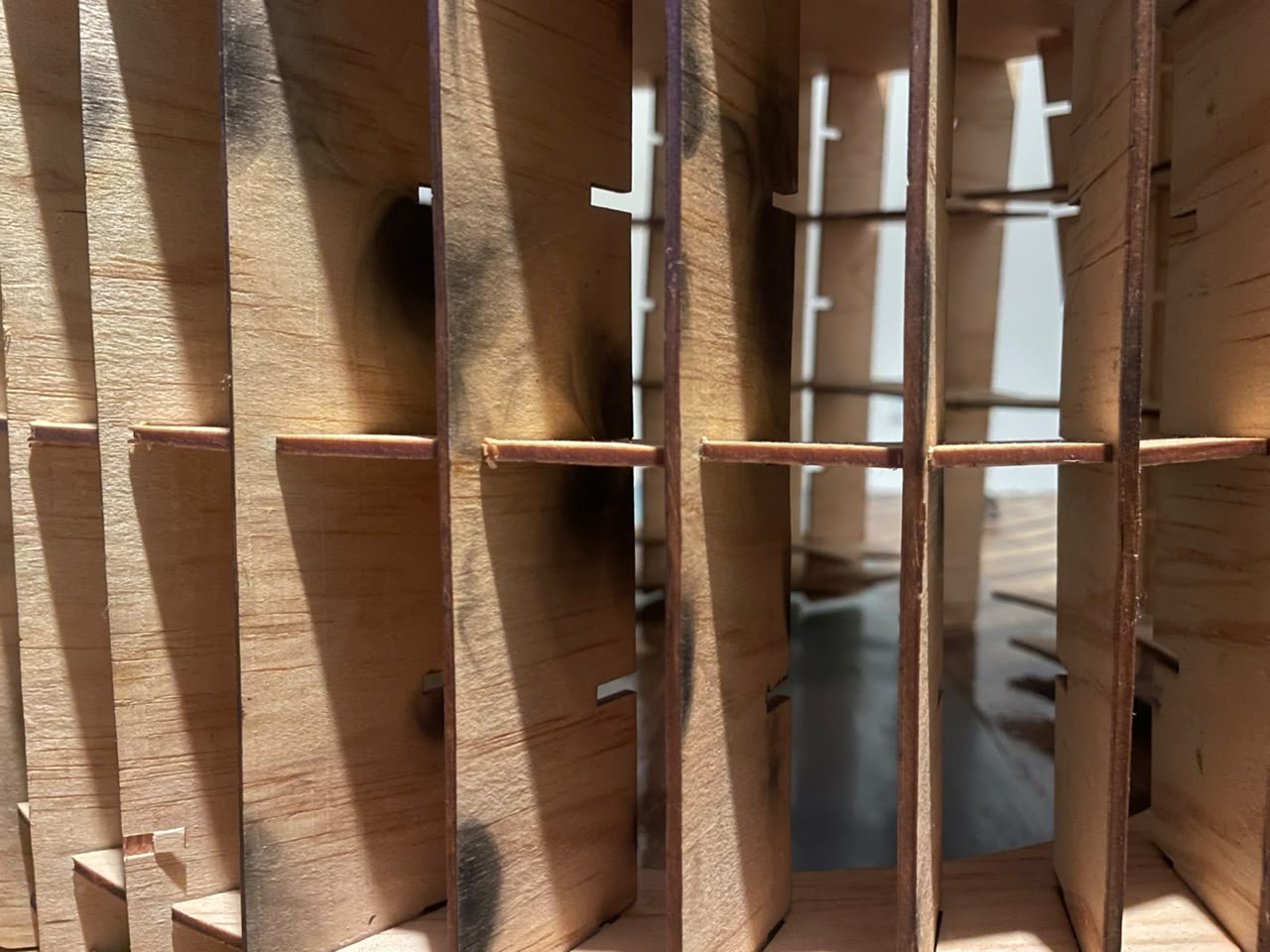
The original joining approach based on interference and friction.
03 — THE STRING IDEA
Then one day an idea struck me.
What if I used a string to hold the members together?
Instead of forcing the individual members to hold themselves together through interference, I could reduce the interference and use a string to retain the structure.
It was a much simpler idea.
I tested it.
The result worked better than the original approach.
The string became a structural part of the design rather than something added afterwards.
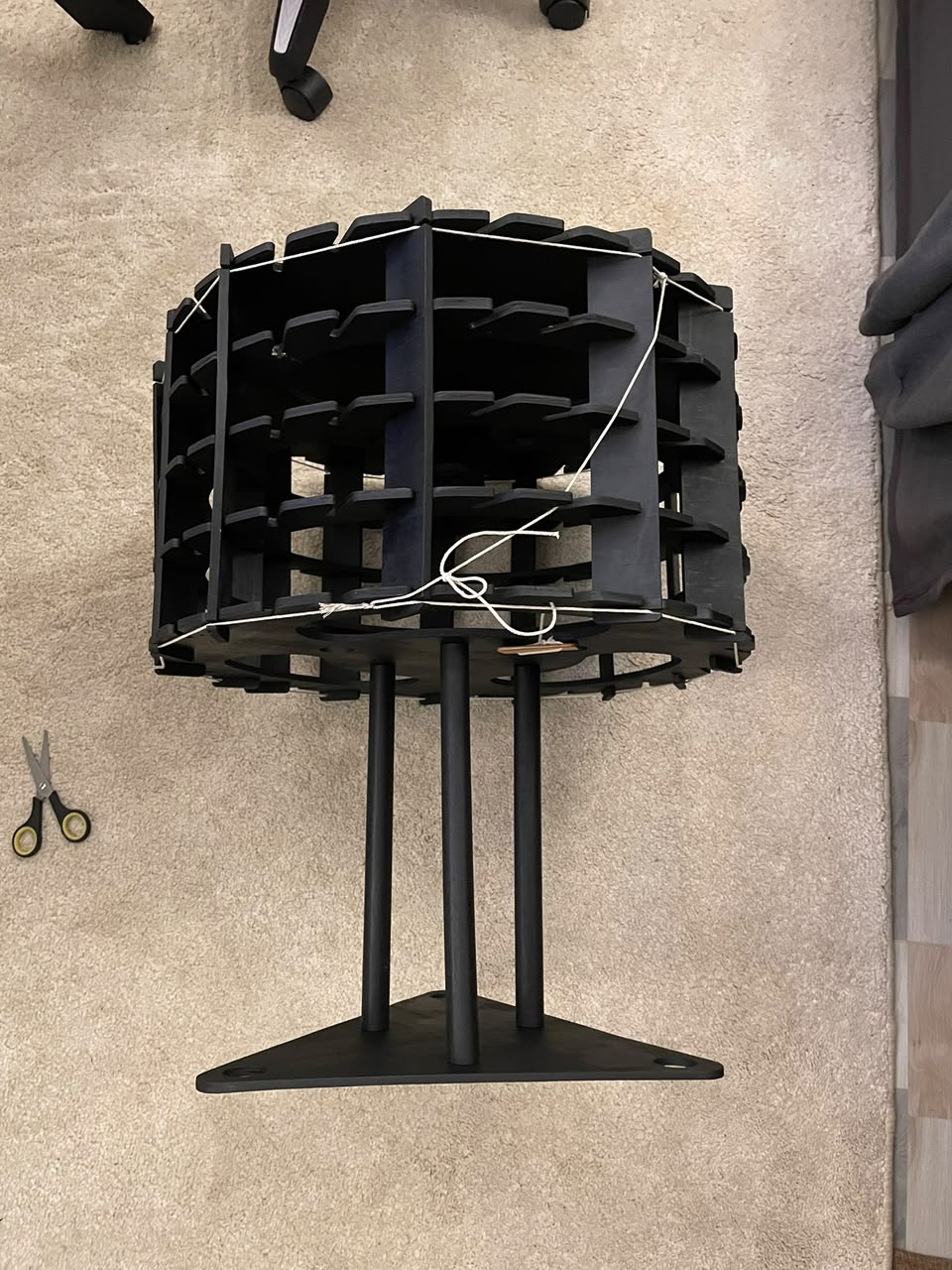
The first prototype using the string retention method.
That experiment eventually became one of the defining details of the Tri-Tran lampshade.
The string wraps around the structure at the top and bottom, holding the members together while also becoming part of the visual identity of the product.
Every lampshade I make now uses this principle.
04 — CAD
Once the geometry started to settle, I moved the design into CAD.
The purpose of the CAD model was not simply to make a digital version of the lampshade.
It gave me a way to control the geometry, adjust dimensions and understand how the individual parts would come together before cutting them.
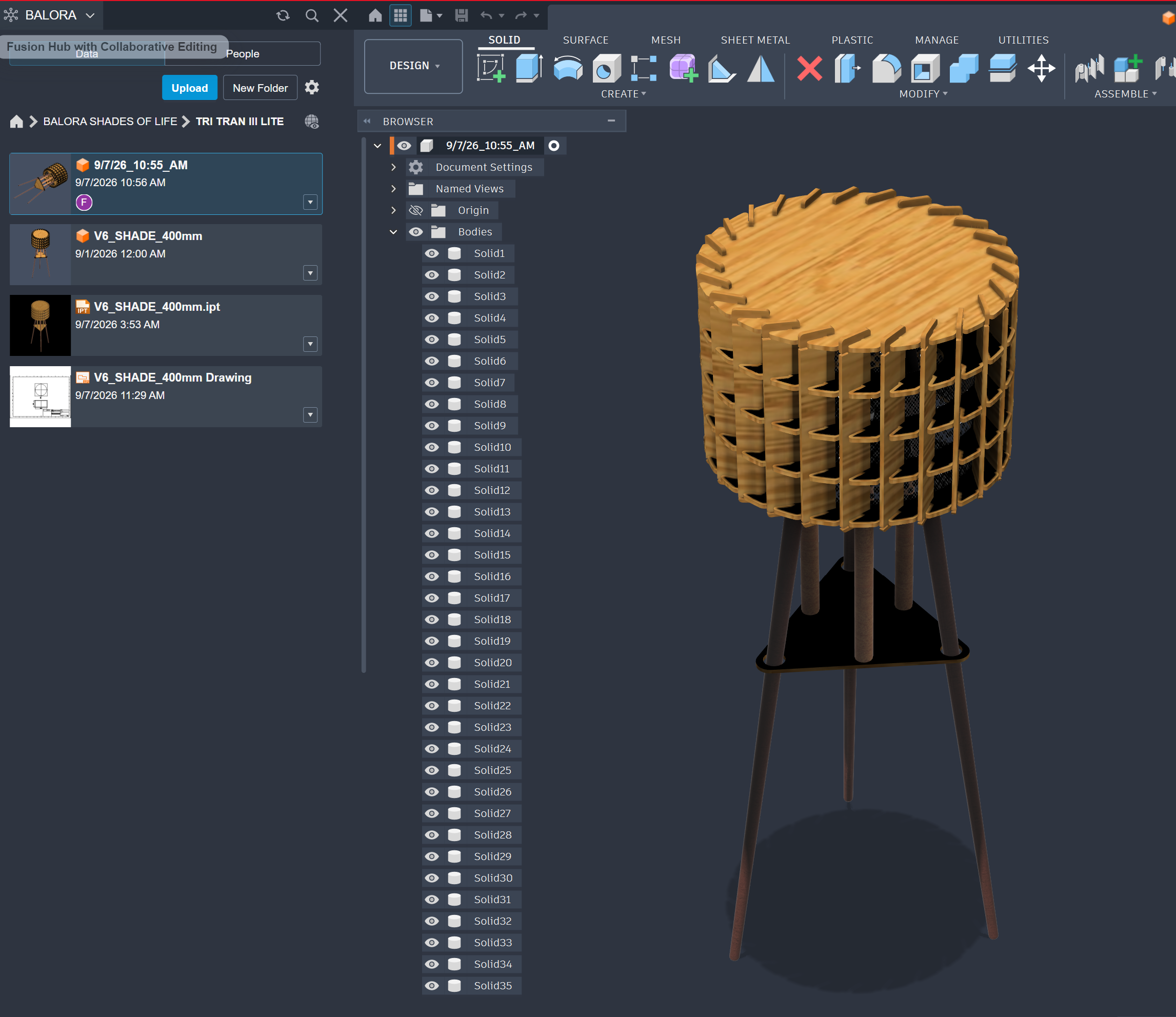
CAD development of the Tri-Tran lampshade.
The design continued to evolve between the digital model and the physical prototypes.
Some changes looked insignificant on screen but became obvious once the parts were assembled.
That meant the physical prototype remained an essential part of the process.
05 — THE PROTOTYPE LOOP
The development process became a continuous loop:
CAD → CUT → ASSEMBLE → INSPECT → MODIFY
The problem was that I did not control the cutting stage.
I was outsourcing the cutting of the parts, which made iteration slow.
A change to the design could mean sending files away, waiting for the parts to be cut, receiving them, assembling the prototype and only then discovering whether the change actually worked.
The gap between iterations could stretch into weeks.
For a product still being developed, that was too slow.
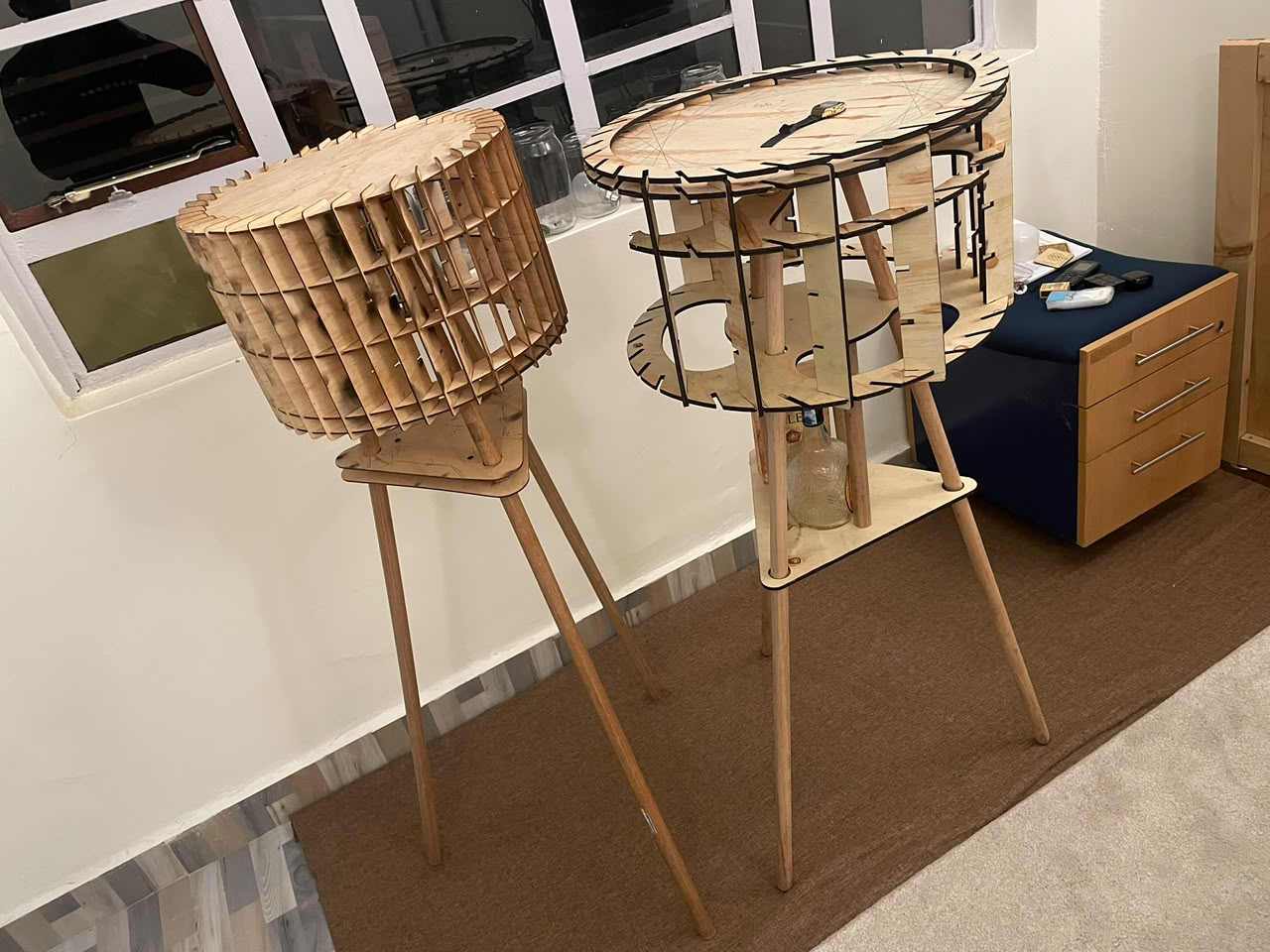
Early prototypes compared with the current design.
06 — BUYING THE LASER MACHINE
Eventually I decided to bring the cutting process in-house.
I bought a laser machine.
That changed the development process completely.
Instead of waiting weeks for another cutting cycle, I could make a change in CAD, cut the new parts and assemble another prototype almost immediately.
The time between iterations dropped from weeks to less than an hour.
That changed how I designed.
I could test more ideas.
I could reject bad ideas faster.
I could make smaller changes and see their effect immediately.
The machine became more than a manufacturing tool.
It became part of the design process.
07 — FROM PROTOTYPE TO PRODUCT
After twelve iterations, the design finally reached a point where the lampshade felt right.
The form worked.
The assembly worked.
The joining method was repeatable.
And the manufacturing process was under my control.
At that point, the Tri-Tran stopped being just an experiment.
It became a product.
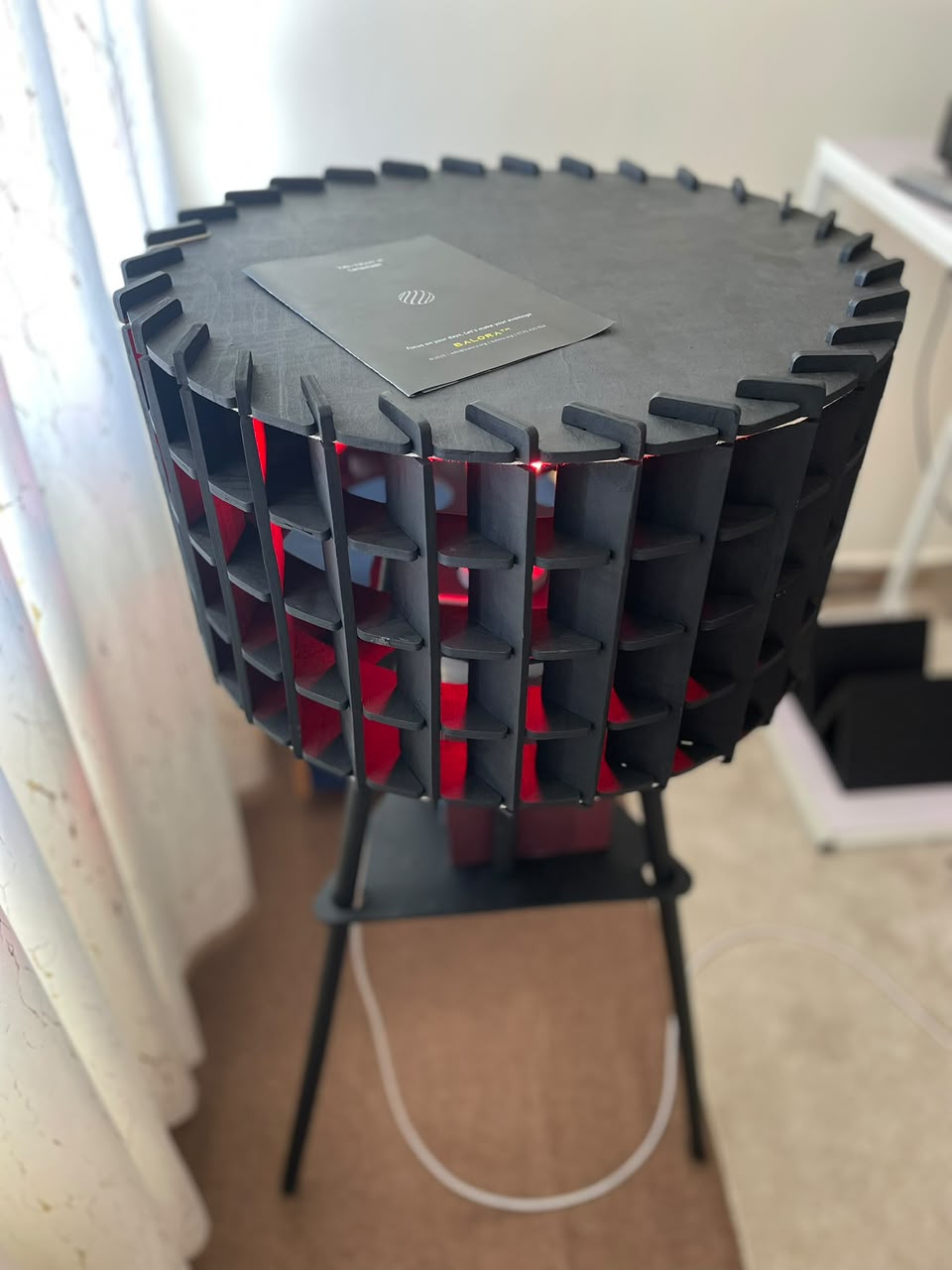
The current Tri-Tran lampshade.
The lampshade has since started gaining traction, and I have sold several units while continuing to develop new variations.
That is an interesting stage of product development.
The product is already being used and sold, but the design process has not stopped.
There are still more versions to explore.
08 — THE ENGINEERING LESSON
Looking back, the final lampshade was not the result of one perfect idea.
It was the result of making the next iteration easier to build than the last.
The biggest improvements did not necessarily come from making the geometry more complicated.
One of the most important changes was actually making the mechanism simpler.
And one of the biggest improvements to the product did not happen inside the CAD model at all.
It happened when I changed the way I manufactured it.
The speed of iteration became part of the design.
09 — WHAT HAPPENS NEXT
Tri-Tran is now at a stage where the focus is shifting from simply finding a working form to developing a repeatable product system.
That means continuing to refine:
- geometry
- assembly
- materials
- manufacturing
- variations
- production
The same process that produced the first lampshade will continue producing the next ones.
SEE THE LAMPS
The development of Tri-Tran continues outside the notebook.
Instagram and TikTok document the lamps, prototypes and new variations as they are made.
Notebook 027
The final product was built one iteration at a time.
END OF NOTEBOOK 027
BACK TO
THE NOTEBOOK
Every finished design leaves another question behind.
RETURN TO JOURNAL